
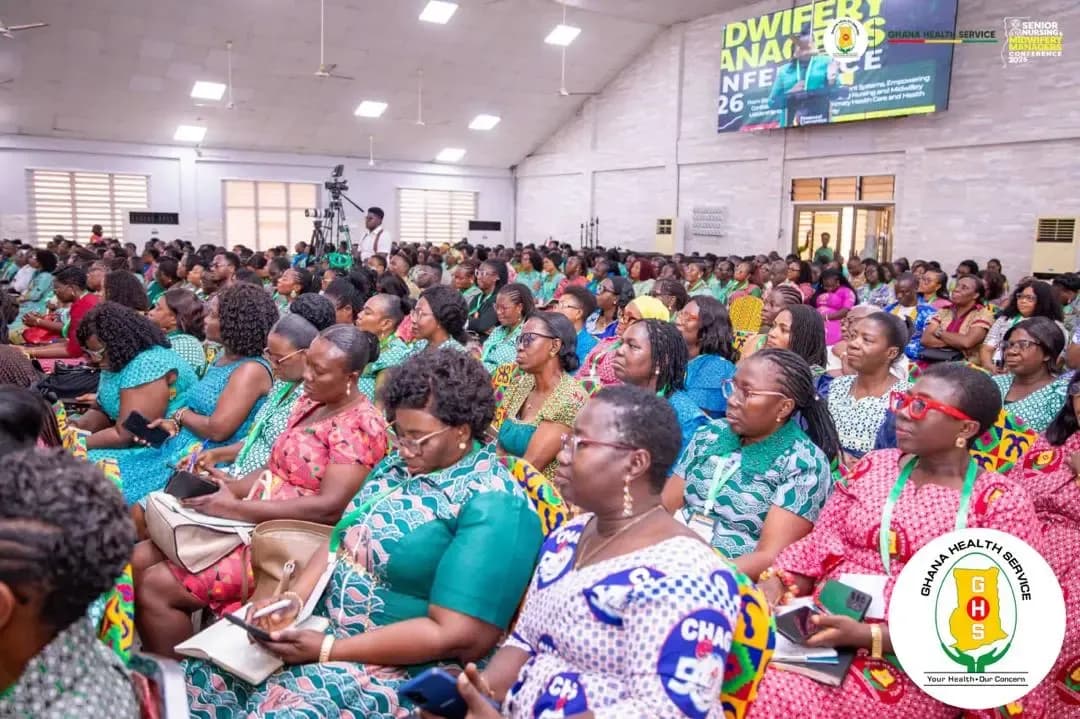
The Ghana Health Service (GHS) has called on nursing and midwifery managers to strengthen leadership, embrace technology and use data and evidence to guide decisions as the health system responds to changing demands.
The call was made at the 2026 Senior Nursing and Midwifery Managers Conference, being held from 22 to 26 September 2026 at the Pentecost Convention Centre, Gomoa Fetteh, in the Central Region.
The conference is being held under the theme, “From Strategy to Impact: Building Resilient Systems, Empowering Confident Practitioners and Advancing Nursing and Midwifery Leadership for Sustainable Free Primary Health Care and Health Security.”
The conference brings together about 500 senior nursing and midwifery managers across the country to deliberate on leadership, professional practice, health system resilience and strategies for improving quality and patient outcomes.
Delivering the keynote address, Professor Lydia Aziato, Vice Chancellor of the University of Health Sciences, emphasised the importance of evidence, data and continuous professional development in effective nursing leadership.
She urged nurse managers to continuously acquire new knowledge and hone their skills, improve upon their technological competencies to adapt to changing circumstances within the health sector.
She cautioned against making management decisions based solely on oral reports or assumptions, urging leaders to interrogate information and use available evidence and data to guide their actions.
“Let us move away from making decisions based solely on oral reports or assumptions. We need to ask questions, examine the facts and use available data to guide our actions,” she said.
Prof. Aziato further highlighted the importance of early detection in healthcare, noting that delays in identifying health conditions could result in complications and chronic conditions as she touched on the significance of the free primary healthcare programme.
Prof. Aziato also stressed that nurse leaders must communicate clearly and effectively, particularly in a health system where decisions and instructions often have implications for service delivery and patient care.
She urged managers to keep their focus on data and strengthen preparedness for future emergencies.
The Chairperson of the conference, Dr Gina Teddy, Acting Chairperson of the GHS Council, said the conference theme was particularly relevant to the changing demands on the health system, noting that nurses and midwives remained at the frontline of healthcare delivery.
She said their foundational roles had assumed even greater significance with the implementation of the Free Primary Health Care (FPHC) initiative, which requires a strong and responsive frontline workforce.
Dr Teddy, therefore, urged managers to pay greater attention to effectively managing the human resources entrusted to them and ensure that patients encountered the health system with dignity.
She encouraged participants to use the conference to identify strategic leadership approaches capable of improving health outcomes, while emphasising the importance of mentorship, data, research and evidence in strengthening nursing and midwifery practice.
The Special Guest of Honour, Madam Adjoa Obuobia Darko-Opoku, Administrator of the Ghana Medical Trust Fund (MahamaCares), commended nurses and midwives for their contribution to the health sector, while challenging nursing and midwifery leaders to assess the practical effect of their leadership, exude confidence in leadership and develop close partnerships to build a well-structured health system.
Madam Darko-Opoku observed that leadership did not have all the answers and therefore required honest conversations, collaboration and humane leadership.
She further emphasised that professional excellence must accompany passion in delivering quality healthcare.
In a special presentation to the conference, the Director of Nursing and Midwifery Services, Dr. Mrs Eva Mensah, presented the Nursing and Midwifery Operational Plan (2025–2028), which focuses on key areas including administration and management, professional practice, clinical education, monitoring and evaluation, research and knowledge generation.
Dr Mensah highlighted the importance of translating the operational priorities into practical interventions that strengthen nursing and midwifery services and contribute to improved health outcomes.
On behalf of the Director-General, the Deputy Director-General of the GHS, Dr Caroline Reindorf-Amissah, in an address said the health system was demanding more from its workforce and urged managers to embrace technology and remain resilient in responding to changing health needs.
She congratulated the Director of Nursing and Midwifery and her team for organising the conference and stressed that the ultimate measure of healthcare delivery was the outcome and safety experienced by clients.
Dr Reindorf-Amissah said the FPHC initiative presented an opportunity to strengthen and broaden health services, improve visibility and promote coordinated approaches towards building a stronger health system.
She emphasised that quality was achieved through human contact points and called on managers to ensure that quality standards became the norm across health facilities.
She reminded senior managers that they occupied a prominent position within the health system and urged them to translate their authority into greater action.
“Mentor others and leave a mark,” she urged, while encouraging managers to recognise the efforts of others and use resources responsibly.
As part of the opening ceremony, two important documents were launched to strengthen nursing and midwifery practice.
The documents are the Standards for Nursing and Midwifery Practice and the Standards and Guidelines for School Nursing Services and are expected to provide clearer professional and service-delivery standards and support the provision of quality nursing and school health services.
The conference also honoured retiring nurses for their years of dedicated service to the Ghana Health Service.
The opening ceremony was attended by the Omanhene and President of the Gomoa Assin Traditional Council, Nana Obrifo Ahunako Ahor Ankobea II, the MCE for Awutu Senya East and the DCE for Gomoa East, senior GHS officials, nursing and midwifery managers, development partners and other stakeholders.