
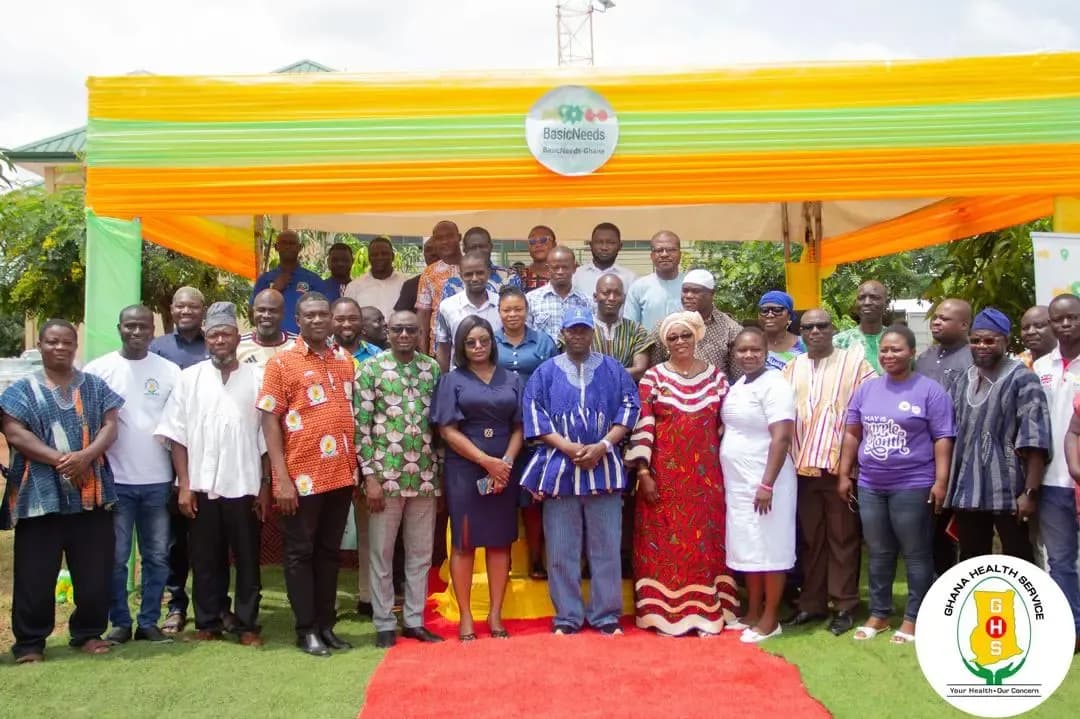
The Ghana Health Service (GHS), in partnership with BasicNeeds-Ghana and other stakeholders, has provided equipment worth approximately GH₵700,000 to 42 health facilities to improve maternal counselling services and promote mental health and psychosocial well-being among women and girls.
The equipment, including desks, chairs, cooling units and privacy screens, was handed over by BasicNeeds-Ghana at its headquarters in Tamale on October 7, 2026 to the Ghana Health Service.
The intervention seeks to create more private, comfortable and supportive counselling spaces for pregnant women, adolescent girls and newly delivered mothers, particularly those living with or at risk of HIV and tuberculosis (TB), as well as survivors of gender-based violence.
The beneficiary facilities comprise 14 district hospitals and 28 sub-district and community health facilities. Of these, 36 are operated by the Ghana Health Service, while the remaining facilities include those managed by the Christian Health Association of Ghana (CHAG).
Speaking at the handover ceremony, the Director-General of the Ghana Health Service, Dr Samuel Akoriyea Kaba, emphasised the importance of mental health and psychosocial support during pregnancy and after childbirth.
He noted that mental well-being was essential to improving maternal and child health outcomes, adding that an estimated 32 to 50 per cent of pregnant women, adolescent girls and postpartum mothers in Ghana experience mental health conditions.
Dr Kaba said the situation underscored the need for early screening, counselling and appropriate referrals to ensure that women and girls receive timely and effective support.
He disclosed that more than 1,304 healthcare workers, including 782 women, had been trained under the initiative to identify mental health needs and provide appropriate care to affected women and girls.
The GHS Director-General commended BasicNeeds-Ghana for supporting efforts to strengthen mental healthcare delivery and urged beneficiary facilities to maintain the donated equipment to ensure its long-term use.
He also highlighted the National Maternal Mental Health Policy, launched in April 2026, as an important step towards integrating mental health and psychosocial support into maternal and child healthcare, including HIV and TB treatment services.
The Executive Director of BasicNeeds-Ghana, Dr. Peter Badimak Yaro, said the project was designed to address gaps in mental health and psychosocial support for vulnerable women and girls during pregnancy and after childbirth.
According to him, a total of 17,799 pregnant women, adolescent girls and newly delivered mothers had been screened under the project, with 7,261 identified as needing short-term psychosocial support.
He called on the government to increase investment in mental healthcare, noting that inadequate funding and limited access to services continued to affect vulnerable groups, particularly women and adolescents.
The project is being implemented with funding support from Expertise France, in collaboration with the Ghana Health Service, the Ghana Mental Health Authority, CHAG, the Centre for People’s Empowerment and Rights Initiatives (CPRI), and the Mental Health Society of Ghana (MEHSOG).
By integrating mental health and psychosocial services into primary healthcare, the initiative aims to make support more accessible to women and girls who may otherwise struggle to receive appropriate care.
The improved counselling spaces are expected to help healthcare workers provide services in environments that respect patients’ privacy, dignity and emotional well-being, while strengthening early identification and referral of mental health conditions.
The initiative forms part of broader efforts to improve maternal and child healthcare by recognising mental health as an essential component of care during pregnancy and the postpartum period.