
Ghana is preparing to join Sierra Leone in the implementation of the Behavioural Intelligence and Infodemic Management (BIIM) system, a tool designed to strengthen the country’s capacity to detect, track and respond to misinformation and public health-related rumours in real time.
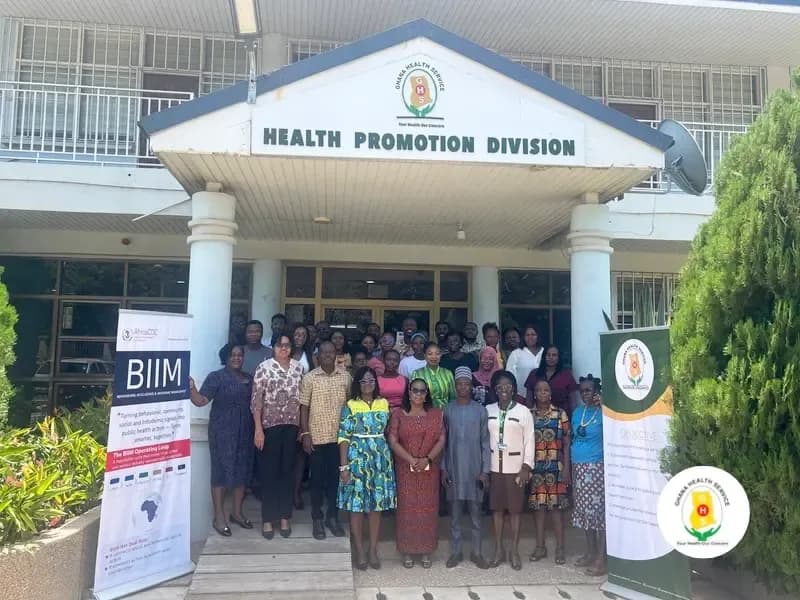
As part of preparations towards the adoption of the system, the Ghana Health Service, in collaboration with the Africa Centres for Disease Control and Prevention, organized a two-day multisectoral stakeholder workshop to introduce and fine-tune the BIIM tool for use within Ghana’s public health communication framework.
The workshop brought together representatives from key institutions including the National Disaster Management Organisation, Veterinary Services Directorate, Food and Drugs Authority, Ghana Fact Check, Redcross, as well as health communication experts, influencers and other stakeholders to review the system and contribute recommendations towards its effective adaptation and implementation in Ghana.
The engagement formed part of ongoing efforts to strengthen behavioural intelligence and infodemic management systems in the country at a time when misinformation and disinformation continue to influence public attitudes and behaviours towards health interventions.
In her welcome address, the Acting Director of the Health Promotion Division of the Ghana Health Service, Mrs. Mabel Kissiwaa Asafo, explained that misinformation has become an increasing concern within the health sector, making it necessary for the Service to strengthen systems that support effective communication and public engagement.
She disclosed that the Division had previously relied on digital monitoring platforms such as Meltwater, Talkwalker and KoboCollect to monitor misinformation and online conversations relating to health issues. However, she noted that sustaining subscriptions and renewing licenses for such platforms had become increasingly difficult over time.
According to her, this challenge informed the decision to work with partners to develop a more sustainable and locally adaptable system capable of supporting long-term infodemic management efforts within the country.
Mrs. Kissiwaa Asafo encouraged participants to actively contribute ideas and recommendations on how the BIIM tool could be improved and made more accessible to support effective data management and public health communication.
The Deputy Director of the Health Promotion Division, Mrs. Bridget Anim, in a presentation, outlined the processes adopted by the Ghana Health Service in managing infodemics. She explained that the process involves listening to public concerns and conversations, verifying information gathered and responding appropriately through engagement and risk communication.
She emphasized that listening to communities remains an important aspect of public health communication because it helps identify rumours, misconceptions and information gaps that may affect health interventions. She added that verifying information before engagement is necessary to ensure that responses provided to the public remain accurate, credible and evidence-based.
Providing an overview of the BIIM tool, Mr. Abara Erim, Technical Advisor on Risk Communication and Community Engagement at the West Africa Regional Coordinating Centre of the Africa Centres for Disease Control and Prevention, highlighted the relevance of behavioural intelligence and infodemic management in strengthening public health response systems.
He explained that the BIIM tool is a nationally owned system designed to gather information on what communities are saying, feeling and believing about health issues and transform it into intelligence that supports timely and informed public health decision-making.
According to him, the system is capable of detecting and responding to rumours in real time while also tracking community knowledge, attitudes and practices relating to health issues. He added that the tool can support the evaluation of communication interventions and create structured channels for community voices to be integrated into health planning and response activities.
Mr. Erim further explained that behavioural intelligence and infodemic management have become increasingly important in public health due to the rapid spread of information across digital platforms and communities. He noted that misinformation can easily shape public behaviour and undermine trust in health interventions if not addressed promptly and effectively.
He therefore stressed the need for countries to invest in systems that support the early detection of rumours and timely response to misinformation to improve public understanding and confidence in health messages and interventions.
The BIIM, first introduced in 2023 in Sierra Leone, was developed to support the detection and management of misinformation and public health rumours through behavioural intelligence and community listening.