
The Ghana Health Service, in collaboration with development partners, has highlighted significant improvements in primary health care delivery following the successful implementation of the three-year Primary Health Care Performance Management (PHC-PM) Project in the North Tongu District and Akwapim South Municipality.
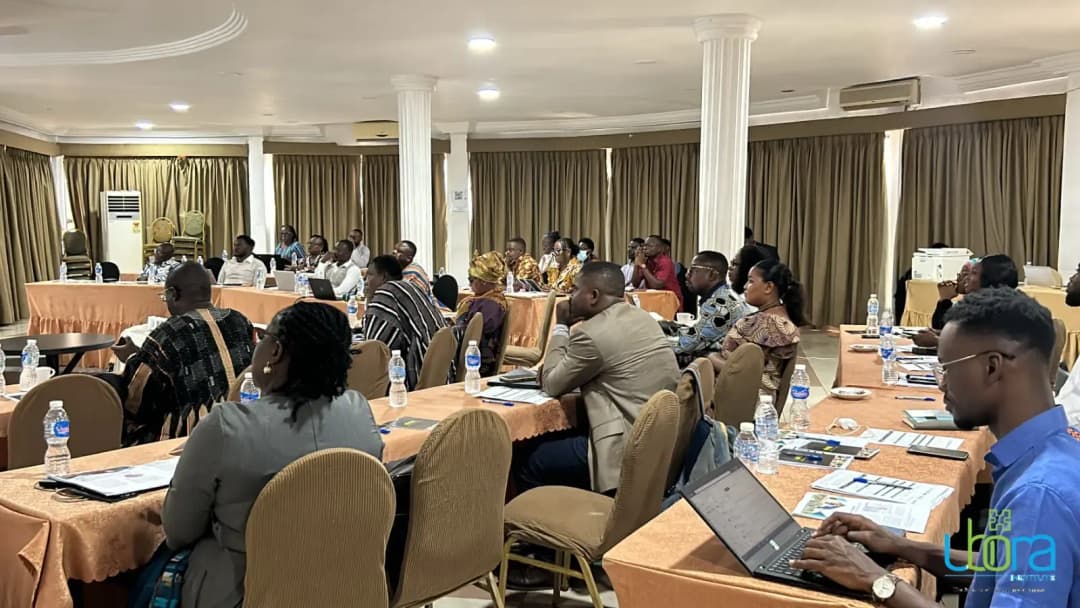
The achievements were celebrated at the project's end-of-project dissemination event held in Accra, where government officials, development partners, health managers, academia, traditional leaders and other stakeholders gathered to review lessons learned and discuss the future of performance management in primary health care.
Delivering the welcome address on behalf of the Director-General of the Ghana Health Service, Dr. Samuel Kwabena Boakye-Boateng, Director of the Policy, Planning, Monitoring and Evaluation Division (PPMED), described the event as more than the close of a project. He said it marked the culmination of a shared learning journey that demonstrated how data, leadership and locally driven innovation could strengthen primary health care delivery at the district level.
He noted that primary health care remains the foundation of Ghana's health system and is central to achieving Universal Health Coverage. According to him, effective primary health care depends not only on infrastructure and human resources but also on the ability of district health teams to generate, analyse and use routine operational and cost data to make informed decisions.
The PHC-PM Project, funded by the Gates Foundation through Management Sciences for Health (MSH) and implemented from 2023 to 2026 by the Ubora Institute in partnership with the Ghana Health Service and HISP Ghana, focused on strengthening the capacity of District Health Management Teams to use data for planning, performance improvement and decision-making. The project also promoted adaptive learning, supportive supervision and locally led innovations while documenting lessons to inform national policy and global practice.
Dr. Boakye-Boateng commended the project's emphasis on local ownership, explaining that district teams were empowered to identify their own challenges, implement practical solutions and continuously refine their approaches based on evidence. He said the model aligns with the Ghana Health Service's ongoing reforms to promote accountability, evidence-based decision-making and continuous quality improvement throughout the health system.
He further observed that the Government of Ghana's recently launched Free Primary Health Care Initiative makes the project's lessons particularly timely, stressing that free primary health care can only be sustained when District Health Management Teams have the capacity to manage resources effectively and make informed decisions.
The project recorded measurable improvements in health service delivery across the participating districts. In North Tongu, anaemia among pregnant women at 36 weeks declined from 36 percent to 27 percent, while skilled delivery coverage increased from 64 percent to 72 percent. In Akwapim South, the National Health Insurance Scheme claims rejection rate fell from 9 percent to 4 percent, outpatient utilisation improved significantly with OPD per capita rising from 0.62 to 0.99, and second-dose Measles-Rubella vaccination coverage increased from 63 percent to 74 percent.
Speaking at the event, Mr. Lawrence Akabori of the Ubora Institute said the dissemination meeting provided an opportunity for partners to reflect on three years of implementation in Ghana and assess what had worked, the challenges encountered and the way forward.
He explained that the project was founded on the belief that District Health Management Teams understand their local contexts better than anyone else. Rather than imposing predetermined solutions, he said, the project provided coaching, data-driven technical support and flexible funding that enabled district teams to identify priorities, test innovations and improve performance.
According to Mr. Akabori, the approach proved successful because it placed district leadership at the centre of decision-making while equipping teams with the tools and support needed to drive sustainable improvements in primary health care.
He expressed appreciation to the Ministry of Health and the Ghana Health Service at the national, regional and district levels for providing the access, collaboration and enabling environment that made implementation successful. Their commitment, he said, transformed the project from an idea into practical improvements that benefited health systems and communities.
As the project concludes, stakeholders agreed that the lessons learned should be institutionalised within routine district health management practices and scaled up across the country to strengthen primary health care and support Ghana's journey toward Universal Health Coverage.
Also in attendance was Dr. Salamatu Attah Nantogma, Deputy Director in charge of IME at the PPME Division as well as Regional Directors for Volta Region, Northern and Eastern Region and district directors and their teams from the two piloted districts.