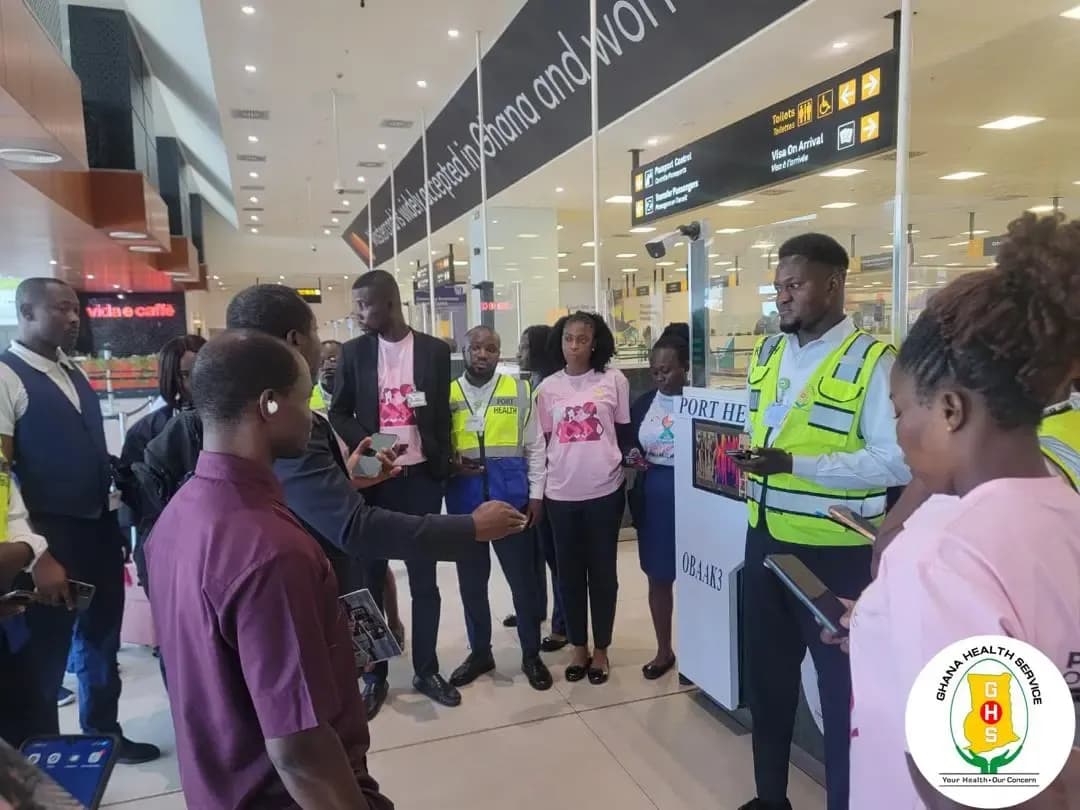
As part of efforts to strengthen disease surveillance and national preparedness following the outbreak of Ebola Virus Disease (EVD) in some parts of the continent, the Ghana Health Service (GHS), through its Port Health Department, has conducted a hands-on training for staff at the Accra International Airport (AIA) Point of Entry on the use of a new electronic Health Declaration Form for Ebola.
The training aimed to help Port Health staff understand and correctly use the electronic Health Declaration Form at the point of entry. It was designed to help staff interpret the system correctly, support passengers when needed, and ensure effective implementation of the country's surveillance and preparedness measures.
During the session, participants took part in practical exercises to gain firsthand experience of how the system works. Staff were given the opportunity to complete and process the health declaration form themselves to better understand its features and functions before its full implementation for arriving passengers.
Addressing participants, Dr. Dennis Laryea, Deputy Director of the Public Health Division, urged Port Health staff to stay informed about countries with reported Ebola cases and carefully verify travellers' histories. He encouraged staff to strictly enforce all preventive measures to help keep Ghana free from Ebola.
During the training exercise, arriving passengers at the airport were screened and guided to scan a QR code to complete Ghana's electronic Health Declaration Form before proceeding through the arrival process.
Speaking on the technological support being introduced, Mr. Hammond Sarkwah, Head of the IT Department, announced plans to deploy webcam devices for scanning QR codes. According to him, this will improve the speed of passenger processing and reduce the need for officers to handle personal mobile phones, thereby minimising the risk of infection transmission.
To support the Service's preparedness measures, the Ghana Health Service also engaged the National Ambulance Service to identify suitable quarantine rooms for suspected cases. The Ambulance Service requested the provision of Personal Protective Equipment (PPE) to support its operations and pledged to make an ambulance available on standby throughout the preparedness period.
The training forms part of the Ghana Health Service's ongoing efforts to strengthen border health security and ensure that the country remains ready to respond effectively to public health threats, particularly the ongoing Ebola outbreak in parts of the continent.