
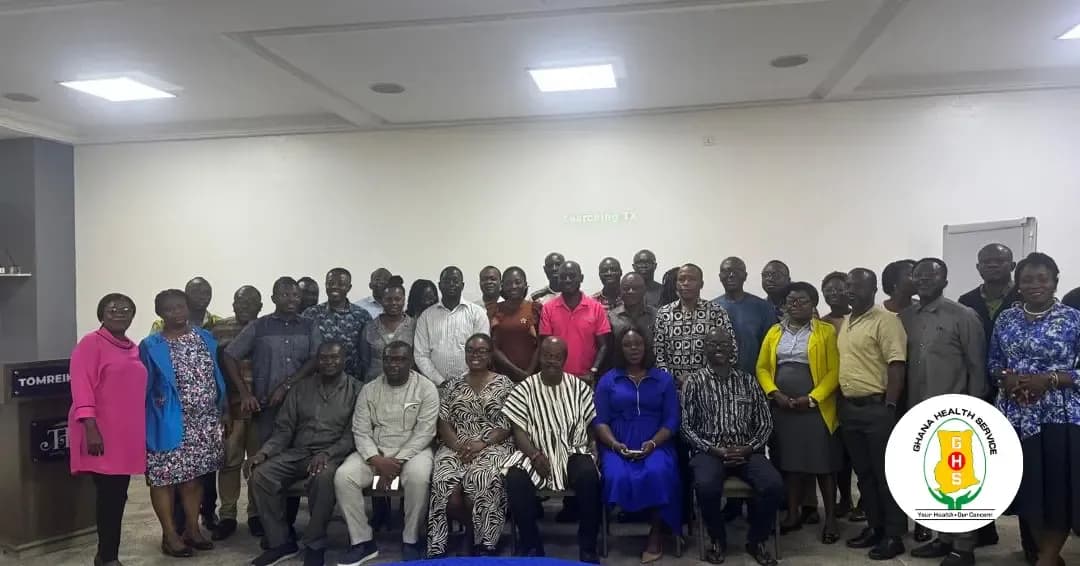
Ghana’s national effort to strengthen malaria vaccine delivery has moved into a new phase this week as PATH and the Expanded Programme on Immunisation (EPI) convened a dissemination meeting to present findings from the R21 malaria vaccine Post Introduction Evaluation and the PATH - GAVI Awards close-out. The session brought together institutions and partners whose contributions continue to shape the future of malaria vaccination in the country.
Opening the meeting, Chairman and former Programme Manager of the EPI, Dr. K. O. Antwi Agyei, emphasized the importance of the Post Introduction Evaluation in informing decisions for the malaria vaccine programme. He expressed hopes that although the GAVI awards phase is winding down, the collaboration built throughout the process will be sustained.
The Ag. Programme Manager of the EPI, Dr. Selorm Kutsoati, in her welcome address expressed appreciation for the extensive work carried out across the regions. She assured partners that EPI will remain closely engaged with stakeholders as the programme moves into its next phase of planning.
In a collective message of support, PATH, World Health Organization, UNICEF Ghana and the John Snow Institute, reaffirmed their shared commitment to Ghana’s malaria vaccine efforts. They acknowledged the country’s leadership among the twenty-four nations implementing the malaria vaccine, noting that Ghana’s status as the first to introduce the combined antigens continues to provide valuable insights for global learning. The partners commended the EPI Programme’s achievements and highlighted Ghana’s ongoing global recognition for its pioneering role in piloting the vaccine. They encouraged the programme to build on the progress made, urging sustained efforts toward nationwide rollout and full national coverage. The coalition further emphasized the need to consider all factors influencing malaria control as scale-up discussions advance, while expressing appreciation for the collaboration to date and assuring the EPI Programme of their continued support as Ghana moves into the next phase of malaria vaccine implementation.
In his closing message, Nana Antwi Agyei called for consistent and accurate data entry, noting that reliable information remains central to national planning and policy direction.
The R21 malaria vaccine Post Introduction Evaluation is a formal assessment conducted after the vaccine’s rollout to determine how effectively it has been integrated into the national immunisation system. It examines operational performance, including service delivery, cold-chain capacity, health worker preparedness, data quality, safety monitoring and community acceptance, while identifying both strengths and challenges that emerged during the introduction phase.