
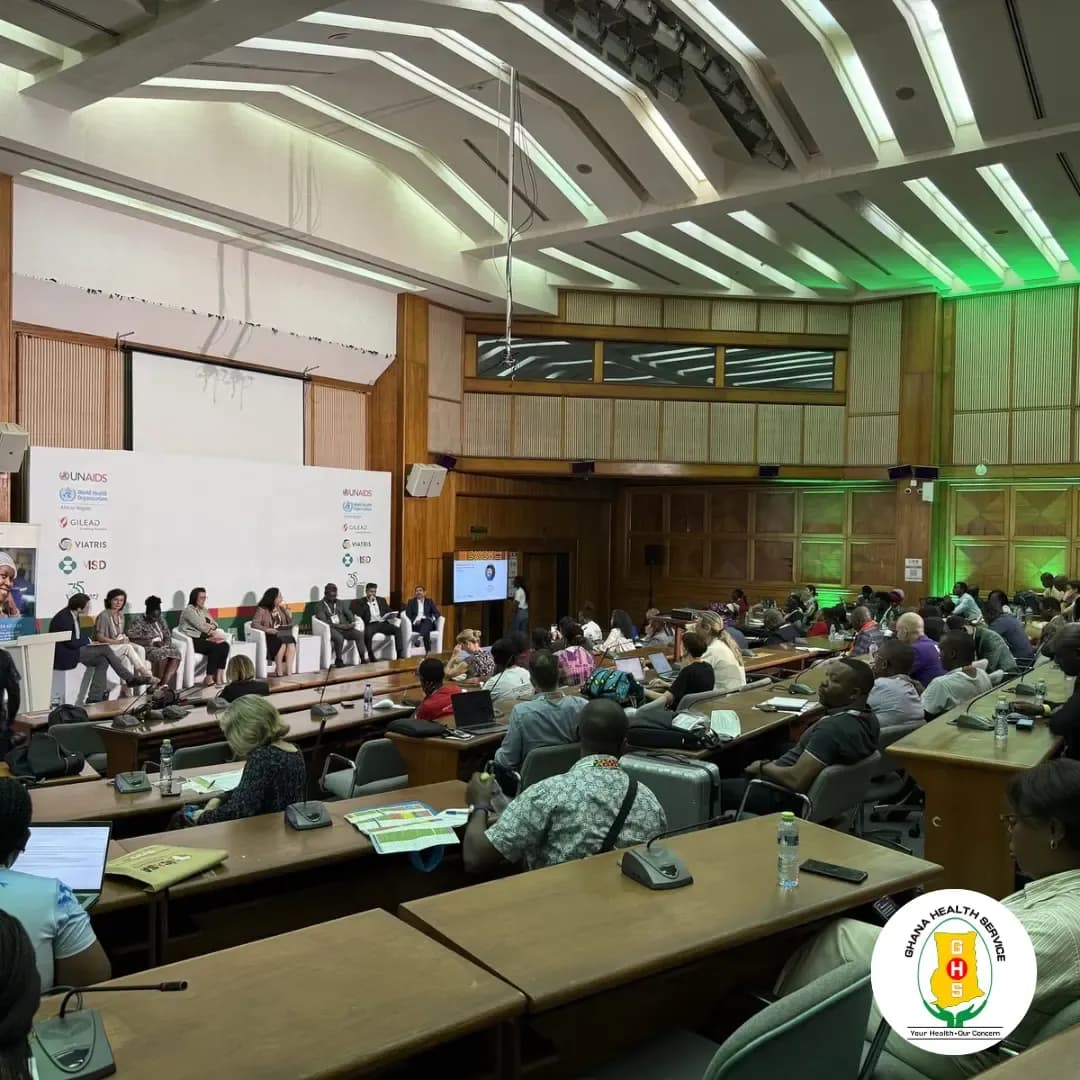
Last Wednesday, the Acting Programme Manager for the National AIDS Control Programme (NACP), Dr. Emmanuel Teviu, joined a distinguished panel at a side event organized by the Medicines Patent Pool (MPP) and UNITAID during the ongoing ICASA Conference in Accra. The session focused on the timely and forward-looking theme: “Breaking New Grounds: Long-Acting HIV Treatment for a New Generation.”
The discussion highlighted the significant advances made in HIV treatment over the past decades, while recognizing the persistent challenge of treatment adherence, particularly among adolescents and young people. For these populations, maintaining consistent adherence to daily oral medication remains difficult, yet achieving and sustaining viral suppression is essential for both individual health and public health outcomes.
Panellists emphasized the promise of long-acting antiretroviral therapies, which offer an innovative approach to improving adherence by reducing the burden of daily pill-taking and expanding treatment choices for people living with HIV. Currently, the combination of cabotegravir long-acting (CAB-LA) and rilpivirine long-acting (RPV-LA) is the only available long-acting regimen approved for HIV treatment.
The session also touched on major global developments shaping the future of HIV care. In July 2025, following updated recommendations from the World Health Organization, ViiV Healthcare extended its licence with the Medicines Patent Pool to enable generic development of CAB-LA for treatment expanding its earlier licence that covered only its use for PrEP. Under this agreement, MPP-licensed generic manufacturers Aurobindo, Cipla, and Viatris are developing long-acting CAB-LA with a commitment to supply at least 133 countries, representing an important milestone in advancing equitable access worldwide.
During the panel, Dr. Teviu and other experts emphasized the relevance of long-acting treatment options for countries such as Ghana, where young people constitute a significant proportion of new HIV infections. They explored how the 2025 WHO HIV Guidelines can guide national decision-making, support programme implementation, and accelerate the introduction of innovative treatment options. The speakers also stressed the importance of collective action from global health partners, national governments, civil society, and manufacturers, to ensure that long-acting HIV therapies are accessible, affordable, and deployed where they are needed most.
The session reinforced a shared commitment to advancing person-centered HIV treatment and expanding innovation that can transform the lives of people living with HIV across Africa and beyond.