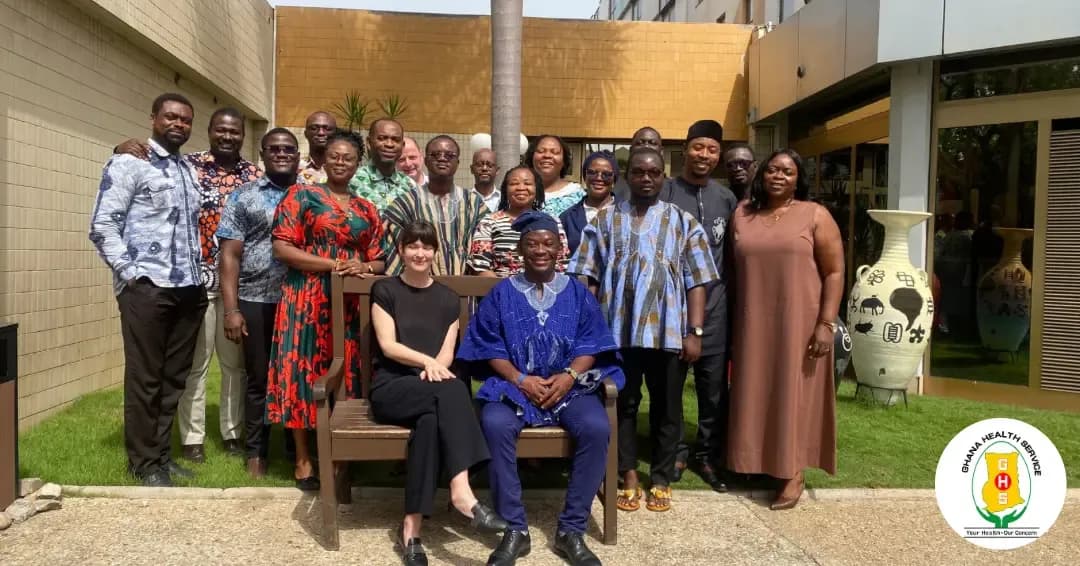
The Ghana Health Service (GHS), through its National Malaria Elimination Programme (NMEP), has concluded a two-day intensive discussion with the Gates Foundation to explore strategic areas of collaboration aimed at accelerating Ghana’s malaria elimination agenda. The engagement marks the first official in-country discussion between the two institutions and builds on earlier discussions held in Dar es Salaam in 2023 and Dakar in 2025.
The engagement sort to align Ghana’s malaria elimination agenda with the Gates Foundation’s malaria surveillance investment portfolio, map the country’s current surveillance ecosystem to identify opportunities where advanced surveillance can drive district-level elimination, and to establish a shared understanding of priority surveillance needs to guide potential future investments.
Presenting an update on Ghana’s malaria situation, Dr. Hilarius Asiwome Abiwu, Ag. Programme Manager of the NMEP, highlighted both the urgency and the opportunity before the country. He noted that although Ghana remains malaria-endemic, with its entire population at risk, the country has achieved a 97 percent reduction in malaria deaths since 2015, declining from 2,137 deaths to 74 in 2024 and further to 52 in 2025. He added that malaria test positivity rates have also dropped significantly over the years, reflecting the sustained impact of targeted interventions and strengthened programme implementation.
Despite the steady gains recorded over the years, Dr. Abiwu noted that the programme continues to grapple with significant operational challenges. He cited shortages of essential malaria commodities, funding constraints that have impacted the implementation of planned interventions, including the Malaria Indicator Survey, Therapeutic Efficacy Testing, and Indoor Residual Spraying, one of the most effective interventions for reducing transmission. He further pointed to weaknesses in data validation at the subnational level and the lack of commodity consumption data for improved quantification and facility stock out prevention as well as the human resource need of the Programme to complete its elimination agenda.
In his presentation on Ghana’s malaria surveillance, Mr. Wahjib Mohammed, Head of Surveillance, Monitoring and Evaluation at the NMEP, outlined the country’s systems, priorities, progress, and gaps. He highlighted Ghana’s strong routine health information system, complemented by the Ghana Malaria Intervention System (GMIS) and the emerging National Malaria Data Repository (NMDR), which will harmonize multiple data sources to improve decision-making. Despite these gains, gaps remain, with an estimated 65 percent of malaria cases, particularly those managed in pharmacies and over-the-counter medicine outlets, going unreported, and limited data on community malaria deaths, constraining the programme’s ability to analyse root causes and strengthen responses. Mr. Mohammed also applauded previous and ongoing support from the Gates Foundation through agencies such as AHADI, noting contributions to the Malaria Surveillance Assessment, data processing for the NMDR, the development of a public health analytics curriculum for health professionals in collaboration with AHADI and the University of Ghana, among others.
In her remarks, Dr. Jenn Gardy, Deputy Director for Surveillance, Data and Epidemiology on the Global Health Malaria Team at the Gates Foundation, reaffirmed the Foundation’s long-standing commitment to malaria eradication. She added that the initial focus of the Foundation was on countries close to elimination, supporting them to cross the finish line and achieve the World Health Organization certification. However, in 2018, the strategy shifted significantly toward sub-Saharan Africa, where the burden remains highest.
Dr. Gardy acknowledged Ghana’s strong technical capacity and political commitment, noting that these strengths position the country to play a leading role in malaria elimination.
““The aim is not just to help Ghana meet immediate needs,” she said, “but to make Ghana an exemplary country, one that other African nations approaching elimination can learn from.”.”
Dr. Gardy indicated that the Foundation’s investment will span over a three-year period, from 2026 to 2028. She explained that, based on the list of priority areas provided by the NMEP, the Foundation has categorized its support into two levels: high and medium priority. The high-priority areas included the NMDR/malaria integrated dashboard, focusing on enhancement and continuous improvement; mortality surveillance aimed at eliminating preventable malaria deaths; mature digital infrastructure; the dual-track program context; and the expanded Vector-Based Disease mandate. Medium-priority areas, such as active research partnerships and surveillance in pharmacies and over-the-counter medicine sellers, to increase coverage and integrate cross-disease surveillance, were not considered less important, but were assigned a lower priority because they require additional effort to implement effectively. However, she added that some of the medium priority activities may be considered as the implementation progresses and other partnerships are identified to support.
In his closing remarks, Dr. Abiwu assured the team of the Service’s commitment to transparency, emphasizing that while malaria elimination remains the core focus, it is also being leveraged as a catalyst for national development and health system strengthening. He expressed appreciation for the foundations’ interest and engagement, highlighting the importance of understanding each partner’s priorities and how they align with existing national strategies. Dr. Abiwu further pledged that all funds will be used effectively to achieve a zero malaria Ghana.
As part of the engagement, the team toured the newly constructed insectary laboratory for entomological studies and other offices at the National Malaria Elimination Programme.