
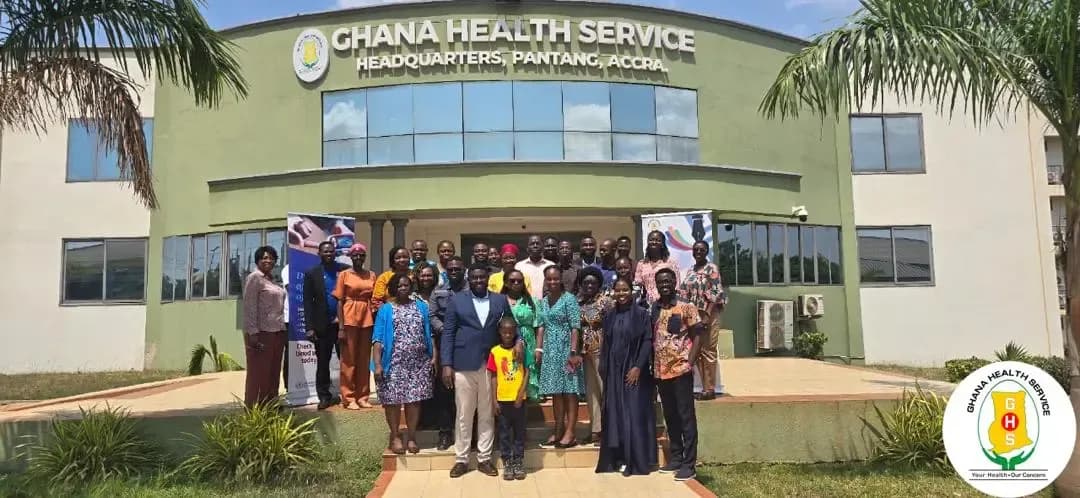
The Service is advancing plans to improve access to quality and affordable healthcare for children, adolescents and young adults living with severe Non-Communicable Diseases (NCDs) through the proposed PEN-Plus National Operational Plan (2026–2031).
The initiative seeks to decentralise specialised care to district hospitals and strengthen the prevention, early diagnosis and management of severe NCDs, particularly among underserved and hard-to-reach populations. The proposed plan was discussed at a stakeholder validation meeting held at the GHS Headquarters, Pantang, to review and validate the PEN-Plus National Operational Plan ahead of its implementation.
Delivering the opening remarks on behalf of the Director of Public Health, Dr. Wallace Odiko Ollennu, Programme Manager for the Non-Communicable Diseases Control Programme at the GHS, emphasised the need to strengthen the health system to provide accessible and sustainable care for people living with conditions such as sickle cell disease, type 1 diabetes and rheumatic heart disease.
He noted that affected families often experience high treatment costs, frequent journeys to specialist health facilities, disruptions to children's education and emotional challenges associated with managing chronic conditions.
Dr. Ollennu explained that PEN-Plus provides an opportunity to bring specialised healthcare closer to communities through district hospitals, supported by trained healthcare professionals, essential medicines, diagnostic services, specialist mentorship and effective referral systems.
He urged stakeholders to critically examine the proposed plan, particularly its staffing requirements, financing arrangements, implementation targets, patient support systems and accountability measures, to ensure effective and sustainable implementation.
He further called for clear institutional responsibilities and stronger alignment with national health financing initiatives, including the Free Primary Health Care initiative, the National Health Insurance Scheme (NHIS) and the Ghana Medical Trust Fund, to reduce the financial burden on affected families.
Dr. Ollennu also highlighted the importance of incorporating the experiences of patients and caregivers into the plan to ensure that healthcare services are accessible, respectful and responsive to their needs.
Non-communicable diseases account for approximately 45 per cent of all deaths in Ghana, while sickle cell disease affects about two per cent of live births. Despite the growing burden, specialised care remains largely concentrated in urban teaching and regional hospitals, making access difficult for patients in underserved communities.
The PEN-Plus approach is designed to address these gaps by strengthening the delivery of specialised care at district hospitals and improving linkages between community-based health services, district facilities and specialist hospitals.
The proposed programme will focus on five priority areas: sickle cell disease, diabetes in children and adolescents, rheumatic heart disease and other cardiomyopathies, bronchial asthma, and childhood obesity.
Under the proposed model, district hospitals will serve as the main service delivery centres, providing integrated outpatient care, essential medicines, diagnostic services and patient education. Community-based Health Planning and Services (CHPS) compounds and health centres will support early identification, health education, follow-up and referrals, while regional and teaching hospitals will provide specialist mentorship and advanced care for complicated cases.
The plan also seeks to improve access to essential medicines and services through the NHIS while addressing the financial and social challenges faced by families managing chronic conditions.
The proposed PEN-Plus programme aligns with Ghana's National NCD Policy (2022), the NCD Strategic Plan (2022–2026), the National Sickle Cell Disease Strategy (2024–2028) and the World Health Organization Regional Office for Africa's PEN-Plus Regional Strategy (2022–2030).
Through the initiative, Ghana aims to reduce preventable complications and deaths associated with severe NCDs, minimise the financial burden on affected families and promote equitable access to quality healthcare, regardless of where people live.
The meeting brought together representatives of the Ghana health service (GHS), World Health Organisation (WHO), Clinton Health Access Initiative (CHAI), NCD Alliance and UNICEF Ghana.