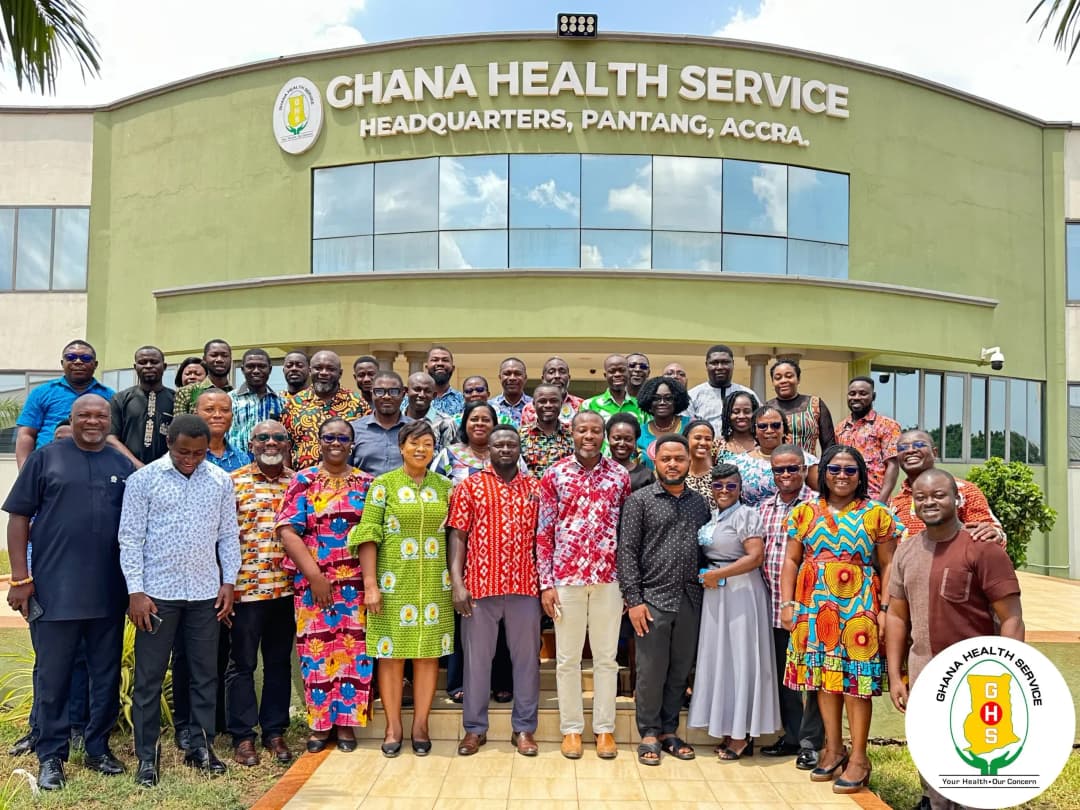
The Ghana Health Service, in partnership with the Gates Foundation, the Noguchi Memorial Institute for Medical Research (NMIMR), Kwame Nkrumah University of Science and Technology (KNUST) and other stakeholders, is advancing efforts to strengthen early disease detection through the validation and finalisation of Wastewater Environmental Surveillance (WES) guidelines.
The initiative seeks to harness information hidden in wastewater to detect disease-causing pathogens circulating within communities, providing an additional layer of early warning to support public health decision-making and outbreak preparedness.
The stakeholder meeting, brought together public health professionals, laboratory experts, researchers and disease surveillance officers to review the draft guidelines and agree on a practical framework for integrating wastewater surveillance into Ghana’s Integrated Disease Surveillance and Response (IDSR) system.
Addressing participants on behalf of the Director-General and the Director of Public Health, Dr. Dennis Odai Laryea, Deputy Director for Disease Surveillance, highlighted the importance of generating evidence through the initiative and strengthening collaboration among stakeholders. He emphasised the need for a coordinated data management system to ensure that information from different sources is harmonised and translated into timely public health action.
Giving a presentation on the overview of Wastewater surveillance , Dr. Azumah Abdul-Tawab explained that wastewater surveillance involves collecting and testing wastewater samples to identify pathogens circulating within a community, including infections that may go undetected because some people experience mild or no symptoms.
He noted that the approach complements conventional disease surveillance by providing insights into patterns of transmission and potentially detecting emerging threats before they become apparent through routine clinical reporting.
Ghana has already demonstrated the value of environmental surveillance through the detection of circulating vaccine-derived poliovirus in 2019, 2020 and 2024. Building on this experience, the country is working towards expanding surveillance to other pathogens of public health importance.
As part of the meeting, participants worked in groups to review key sections of the draft guidelines, including governance and coordination, priority pathogens, sampling methods, data management, reporting, and monitoring and evaluation. The group presentations and subsequent discussions helped identify gaps, clarify technical issues and propose amendments to improve the guidelines’ accuracy and practical application.
Discussions also highlighted the importance of establishing clear information-sharing pathways, strengthening laboratory input and ensuring that authorised users can access surveillance data through appropriate platforms to support decision-making.
The validation exercise marks an important step towards a more coordinated and sustainable wastewater surveillance system in Ghana. Through continued collaboration between the Ghana Health Service, its partners and other stakeholders, the initiative is expected to strengthen early warning, improve disease detection and enhance the country’s preparedness and response to public health threats