The Ghana Health Service has announced plans to sustain the gains made under the Obstetric Triage Implementation Package (OTIP) following the formal closeout of the project by its implementing partner, Kybele. At a meeting held in Accra to officially mark the end of the nationwide scale-up, health leaders reflected on the impact of the intervention and outlined clear steps to institutionalize it within Ghana’s health system.
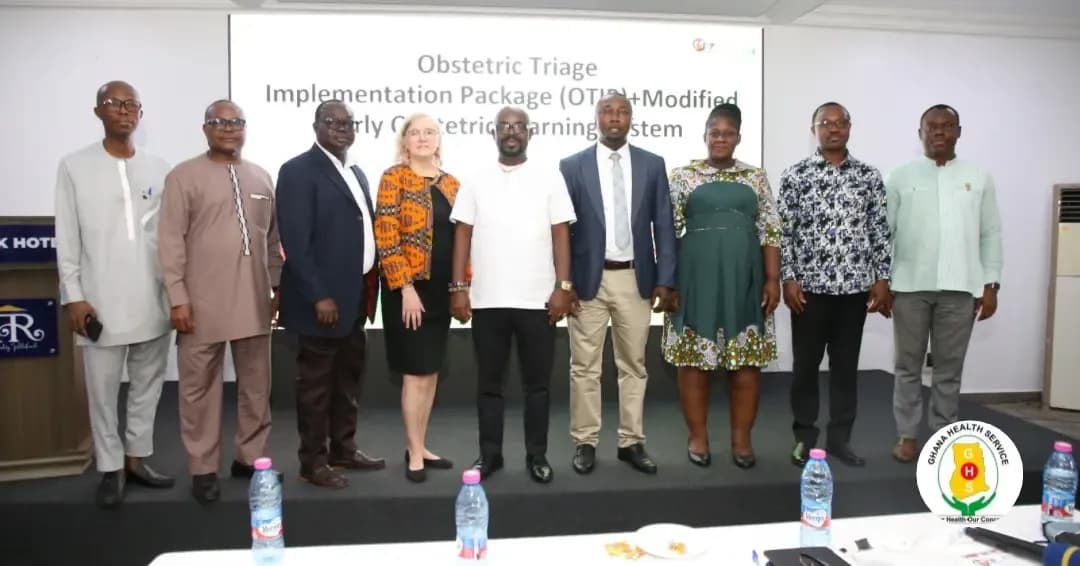
The meeting brought together directors, partners and frontline implementers to review the journey so far. Some implementing facilities shared experiences, lessons learnt and recommendations for sustaining the intervention beyond Kybele’s exit, with GHS leadership reaffirming its commitment to embed OTIP into existing quality improvement systems across the country.
Implemented in 14 regions and across over 75 high-volume health facilities, the project introduced a structured obstetric triage system that color-coded pregnant women according to the severity of their condition. The approach enables midwives in high-volume hospitals to rapidly assess incoming maternity patients and prioritize those most at risk. Patients are assigned color-coded wristbands to indicate their level of urgency and are monitored using a tracking chart to ensure prompt attention if their condition deteriorates. This system significantly reduces the “third delay,” where patients wait for long hours before being seen by a healthcare provider, thereby lowering the risk of life-threatening complications.
Delivering a welcome address on behalf of the Director-General of the Service, Dr. Samuel Kaba Akoriyea, the Director of the Institutional Care Division, Dr. Lawrence Ofori-Boadu, described OTIP as a lifesaving intervention that has strengthened the culture of quality within the Service. He emphasized that excellence, commitment and continuous improvement remain core standards of GHS and reiterated that the project has reinforced trust between clients and healthcare providers. He applauded the success of the nationwide scale-up and stressed that the significant reduction in the third delay demonstrates the intervention’s impact. He assured stakeholders that the Institutional Care Division would integrate the intervention into broader national quality improvement strategies and expressed confidence that the strong human resource capacity within the Service provides a solid foundation to sustain the programme and protect the gains made in maternal health delivery.
The Director of the Family Health Division, Dr. Kennedy Brightson, commended health facilities for their dedication and called on Deputy Directors of Clinical Care to conduct periodic visits to facilities within their regions to assess maternal and newborn care services and provide continuous guidance where necessary.
Also addressing the gathering, the Director of Nursing and Midwifery Services at the Ghana Health Service, Dr. Eva Mensah, expressed appreciation to Kybele for the initiative and noted that the project aligns with ongoing reforms within nursing and midwifery practice. She underscored the importance of embedding OTIP into standard practice to enable performance measurement and documentation of results. She stressed that although Kybele’s implementation phase has ended, the work to strengthen maternal care must continue, adding that her office will consult Kybele for further documentation to support improvements.
In her remarks, Dr. Medge Owen, Founder and Co-Executive Director of Kybele, stated that two recent systematic reviews of obstetric triage in global literature identified Ghana as the only country to have successfully scaled a national obstetric triage system. She emphasized that while some countries have introduced guidelines or piloted similar initiatives, Ghana remains the only nation to have implemented obstetric triage at scale. She revealed that requests have been received from other African countries to support the adaptation and expansion of the model. She commended the Service and indicated that Ghana’s experience positions it as a beacon for other African countries seeking to strengthen maternal care systems.
As part of the meeting, awards were presented to high-performing regions and facilities in recognition of their outstanding performance throughout the implementation period, as well as to the Ghana Health Service. Certificates were also presented to all national and regional champions who supported the implementation of the programme across the country.